By Angela Lovell
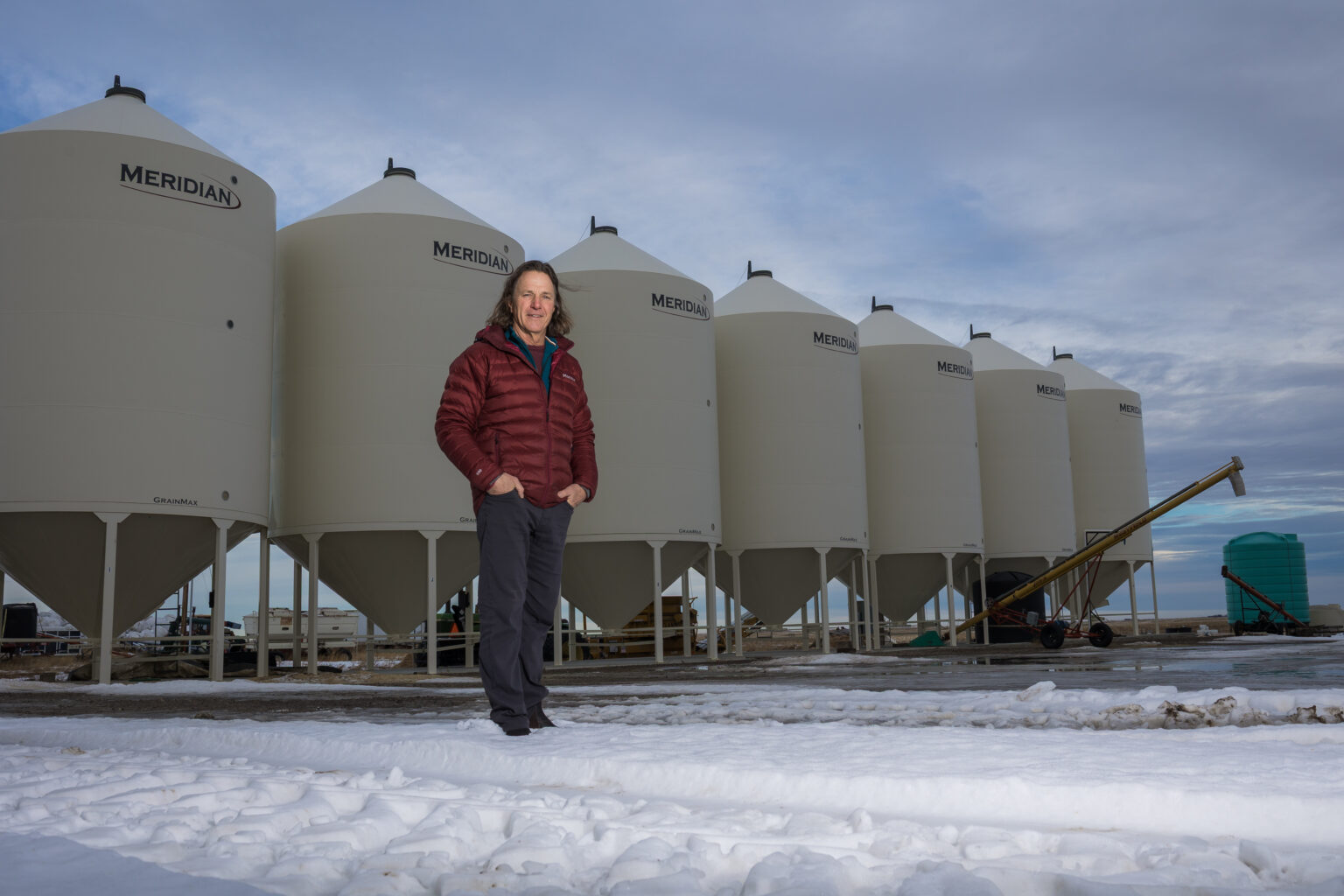
Rod Lanier is grateful that his grandfather, Tom, got off the train 12 miles south of Lethbridge in 1911, and established his farm on land with highly productive soils and a favourable climate. Along with some innovation and strategic planning, those factors have helped ensure the growth and success of NeverIdle Farms, which today boasts 2,400 acres of diversified crops and two thriving value-added businesses.
Ike Lanier, Rod’s father, was one of the first farmers in Western Canada to adopt zero-till approximately 35 years ago, and since starting the transition process in 1990, Rod has followed the tradition of seeking opportunities to improve the productivity, profitability and sustainability of the farm.
For the Laniers, it all started with the goal of getting the most value out of every acre. When some crops responded better to no-till than others, Rod and his dad began experimenting with different rotations to find what provided the most financial value, while at the same time maintaining the health and productivity of their land.
“I chose to expand the revenue-generating potential of NeverIdle Farms by value adding rather than buying more land,” Rod Lanier says. “We came up with the four crops we are currently growing, which are durum wheat, lentils, flax and hemp. It was a successful rotation that suited our no-till system and was financially rewarding as I began to take over the farm.”
But as Lanier explored the possibilities for each of these four crops, he came across the concept of terroir – a term referring to flavour characteristics imparted in a crop through unique environmental and farming practices. After Lanier’s durum wheat flour won some taste tests, he learned it had a distinctive flavour thanks to being grown in a cold climate on no-till soils. So, Lanier explored the possibility of producing semolina flour for pasta production from his own wheat.
Lanier’s neighbour, Jason Saunders, was also interested in exploring new opportunities for his own high-quality durum. The two joined forces and were fortunate to partner with a local durum mill that could provide separate storage bins for their production, allowing them to sell their flour at a premium as an identity preserved (IP) product.
The final piece of the durum project fell into place when the wheat board was dissolved, and Lanier was able to find a U.S. partner, Shepherd’s Grain, for direct exportation. Today, NeverIdle Farms and Saunders Farms directly export all their combined durum production to the U.S.
“We have lots of customers and it’s been very rewarding both seeing how the customers like our IP semolina, as well as the financial benefits of eliminating several middlemen,” Lanier says.
Turning negatives into positives
Of course, there have been some challenges along the way and a few mistakes, including issues with pricing in durum’s extremely volatile market. But as with most knowledge-building experiences, a negative can often become a positive in the end.
“One of our pricing issues had us far underselling into the market, but we had guaranteed our customers a price, so even though it was under the market, we stuck with it, fulfilled their orders, and then they stayed with us,” Lanier says. “It has been rewarding since, and we learned from that mistake not to panic and to do what we said we would do.”
Sparking interest in the next generation
Lanier’s wife, Lori, also works part time on the farm, and while three of their children are pursuing other careers, their youngest son, 22-year-old Quinn, comes back to farm between his studies at the University of New Brunswick, where he is completing a psychology degree. But his interest in the farm has been growing.
“It will be my job to create the opportunity for him if his interest continues and he thoroughly understands how much hard work and long hours farming takes,” Lanier says.
Towards that end, Lanier recently added another enterprise to the farm – a hemp decortication plant for separating out the different components of the plant: seed, fibre and hurds.
“We knew that if we just sold a bale of hemp without separating it, it was worth $100 per metric ton, but separating it tripled the value of the individual products,” Lanier says. “Once separated, the values of the different hemp products, much like the durum, completely changed the financial rewards available to us.”
There’s still a lot of work to be done in finding markets and value for the different hemp products. Lanier is working with an oil company that has figured out how to change hemp oil into an epoxy, with hurds showing a lot of potential as an insulation material.
“It’s coming along, but there are a lot of pieces,” Lanier says. “At the moment, the hemp project needs more decisions and some equipment changes, as well as determining which of the hemp products we are going to focus on because there are only so many dollars that the farm can throw at these projects until they start getting payback.”
Although challenges remain to realize the extra value, the hemp project may offer new opportunities for the next generation to pursue.
“The value-added brings a different dimension to the farm that I believe is more enticing for the next generation to stay and develop it,” Lanier says. “I think that may be one of the benefits. Quinn has already started a couple of projects of selling the hemp fibre in a different way as a ground cover product. He has found a business partner to develop it and seems very intrigued by it.”
What it takes to do value-added
Lanier acknowledges he could not have done either of his value-added projects without the help of good partners and mentors who were more than willing to share their expertise.
“We were lucky enough to have great contacts at the Parrish & Heimbecker durum mill here in Lethbridge, and at Shepherd’s Grain, and along with that came exceptional expertise to help us,” Lanier says. “It was about finding the right people to ask and asking them the right questions so that we could make good decisions to move forward.”
While collaborations and partnerships have been key to the farm’s successful foray into value-added, Lanier emphasizes that each new enterprise requires careful planning and cautious money management.
“It gives more breathing room on the financial end to invest in things without being too tight, but you still have to be careful and not put too many dollars into a project before it starts to look to be a revenue generator,” he says.
It also involves a lot of legwork. “If you are going to start something like this, make sure you enjoy all the extra meetings and travel,” he says. Lanier has supported the marketing of his product by exploring hemp opportunities in Germany and the U.S., which included attending a major pasta show in Las Vegas.
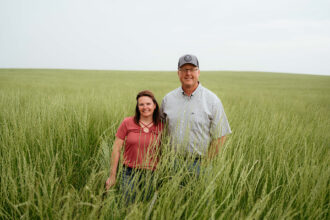
“Travelling last year to pasta customers that could not make up their mind, and telling the story of the farm, that it is third generation, and when they scan our pasta flour bags, they see a picture of my parents sitting in a field of durum wheat, was so rewarding,” he says. “I have been told it is the story that intrigues the buyer, and then they take it home and taste it.”
Keeping an eye on trade
Lanier’s semolina flour is still covered under the CUSMA rules and is currently not subject to U.S. tariffs, but he knows that could change in an instant.
“A few weeks ago, President Trump tariffed Italy on all incoming pasta so he could wake up tomorrow and tariff us as well, but let’s hope not,” he says, adding it would mean some tough decisions for the farm. “Whether our American customers can survive a tariff of a certain amount, or whether we would have to help them pay the tariff and avoid them going to an American durum supplier [is a big question].”
But Lanier is not given to worrying about things he can’t control and continues to focus on ways to improve and move the farm forward.
“We will continue caring for the land,” he says. “We will continue to improve and expand the value-added projects and create an opportunity for the next generation that has expressed interest in that part of the farm.”