


By Becky Zimmer
With the growing popularity of hybrid rye, more western Canadian farmers are exploring ways to incorporate hybrid rye into their crop production schedules and crop rotations.
Hybrid rye tends to choke out stubborn weeds like foxtail barley, wild oats and kochia, so for farmers with marginal acres, rye crops provide more benefits than just a stronger profit margin and growing marketability.
Whether you’ve been planting hybrid rye for years or months, there’s always something to learn about getting the most out of your fall crops.
New to plant
According to KWS, hybrid rye varieties offer drought tolerance, efficient nutrient use and strong resistance to ergot, as well as consistently high yields and standability.
These are what drew Lance Ambrock to give hybrid rye a chance.
A fourth-generation farmer, Ambrock was looking for something new to diversify his grain farm near Myrnam, Alberta. This past fall was his first time planting hybrid rye, KWS Bono, adding a fifth crop to his 3,000-acre operation.
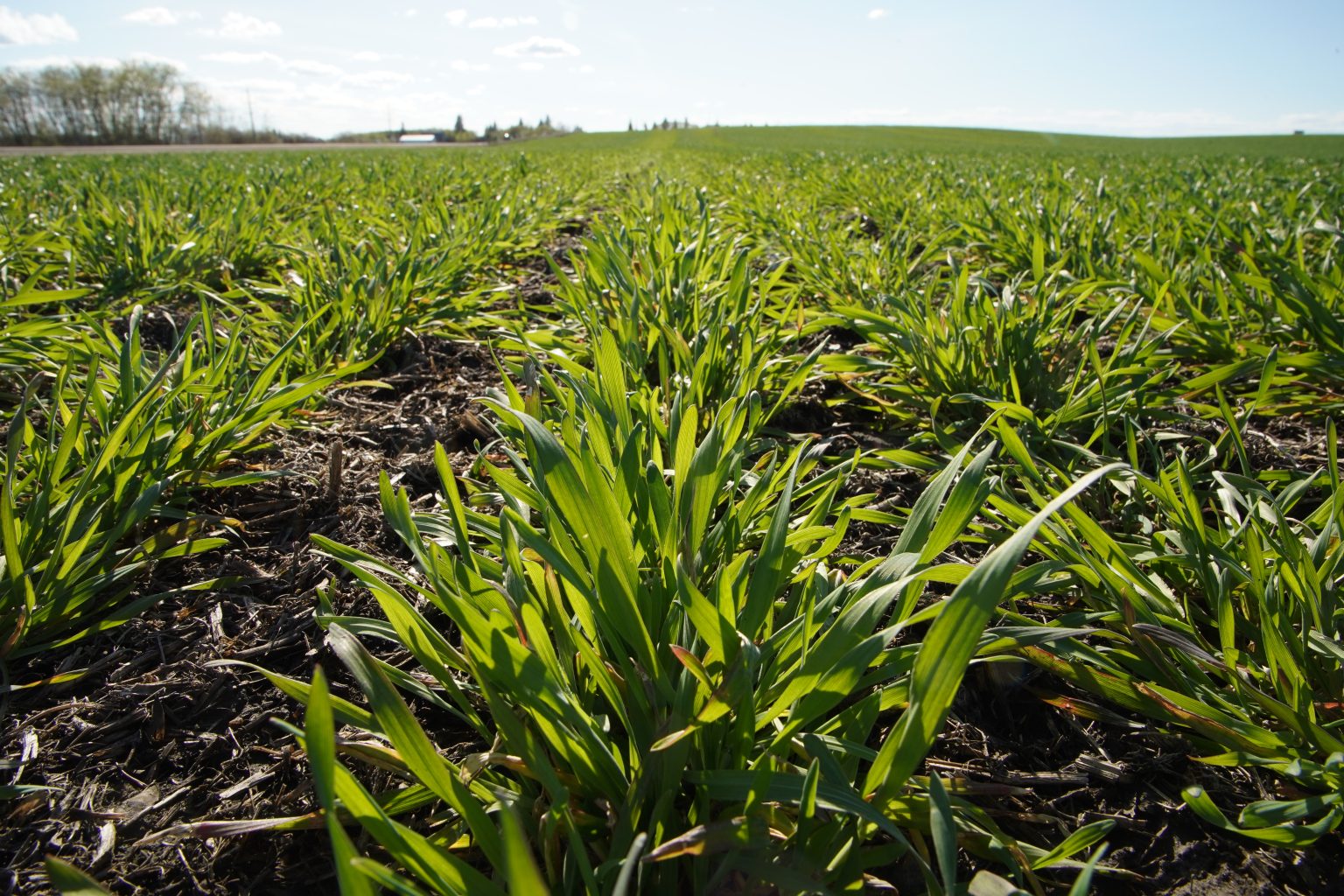
After seeding into hot, dry conditions in early September, much of the crop sat in the ground waiting for moisture. In many cases, emergence didn’t come until early November, when a small rainfall followed by significant snowfall finally triggered germination.
As Ambrock explains, while fields showed little visible growth heading into winter, digging beneath the snow revealed a different story: uniform sprouting across the field. That early root and shoot development is exactly what hybrid rye needs to vernalize before dormancy and elongate in the summer to produce grain.
Now, with weather conditions improving, those fields are proving it out. Early May assessments showed solid establishment, with plant stands in the 16 to 18 plants per square foot range. The next chapter will depend on how the crop continues to develop, but the foundation for a successful year is firmly in place.
Ambrock says he is still being cautious and starting small, with a 250-acre marginal field now in rye production. Half of the field was covered in wild oats, while conditions on the other half weren’t as extreme. It will be interesting to see the result between the two different growing conditions, he adds, but starting out on marginal acres has been the perfect time to learn what works before chancing a bigger crop with more to lose.
“At the end of the year, if we get a good result out of it, that proves, when the conditions do get better, we will have more success compared to doing it the other way.”
Driving down the road with his grain seeder in the fall did earn Ambrock some interesting texts from his neighbours, but getting the rye in the ground was less stressful than waiting for his canola to ripen.
Seeding any crop in the fall is labour intensive, but if the hybrid rye makes it worth the work, Ambrock believes they will have an easier time with it next season with more experience under their belts.
Experienced and thriving
As a full-line seed retailer and processor, Eric McLean puts three-quarters of his 10,000-acre seed farm into production in Oak River, Manitoba, including cleaning and conditioning hybrid rye seed products for KWS.
McLean has watched hybrid rye grow in popularity and marketability over the last five years, from its contributions to cover crop mixes, animal feed, and food and beverage production.
He says it’s flipped crop production on its head, because instead of having crops emerge with the weeds in the spring, they have a head start in the fall and can outgrow a lot of those weeds that can impact yields and the need for inputs.
“They don’t need as much chemical weed control on them to be able to help keep the field clean. That helps to manage weeds that are resistant to chemistries, or high, heavy populations they just can’t establish in the same way, if the rye is healthy and coming first.”
According to McLean, wild oats is one of those weeds that just can’t compete with the hybrid rye varieties, which negates the need for herbicide applications to his rye crops.
Some hybrid rye varieties are also better equipped to handle ergot infestations – a toxic fungal disease found primarily in cereal grains like rye. As the market grows for rye as animal feed, controlling ergot at the source with strong genetics is cutting back the need for expensive grain cleaning.
Besides these lower input and cleaning costs, farmers are also welcoming this new addition to their crop rotations, but it does take some additional planning on whether the rye will be a good fit for that plot of land.
Some years are easier than others, says McLean, and whether the previous crop is one that comes off early enough in the season to easily jump in the seeder and get the rye planted among the stubble. Early seeded canola, barley, oat and pea crops have been great precursors to rye planting since the residual stubble holds onto the fall and winter moisture and encourages that three-leaf fall emergence that rye needs for spring success.
However, what went into, and onto, the ground before could have a negative impact on what’s coming up, or not going to come up, in the future, adds McLean, so farmers must take note of what came before to plan for what they want after.
“We have to always watch whatever chemistries we’ve used on those crops to be able to make sure that they’re not going to affect the rye establishment going forward,” he says. “Peas could have a chemistry that you apply onto them that could damage the rye. And same thing with some of the other soybean crops.”
As a winter crop, McLean wasn’t interested in growing rye until hybrids came on the market.
He says advances in breeding have led to better ergot control and more dependable establishment – critical benefits when working against weather and labour constraints in the fall. With those improvements, hybrid rye is becoming a more attractive and manageable option to move forward with.